
A humidity-sensitive memristor brings touch-free neuromorphic computing closer to reality
GA, UNITED STATES, September 24, 2026 /EINPresswire.com/ -- A new humidity-sensitive memristive device that mimics
Press Release Disclaimer: This is a press release distributed through the XPR Media network. It has not been independently verified by our newsroom.
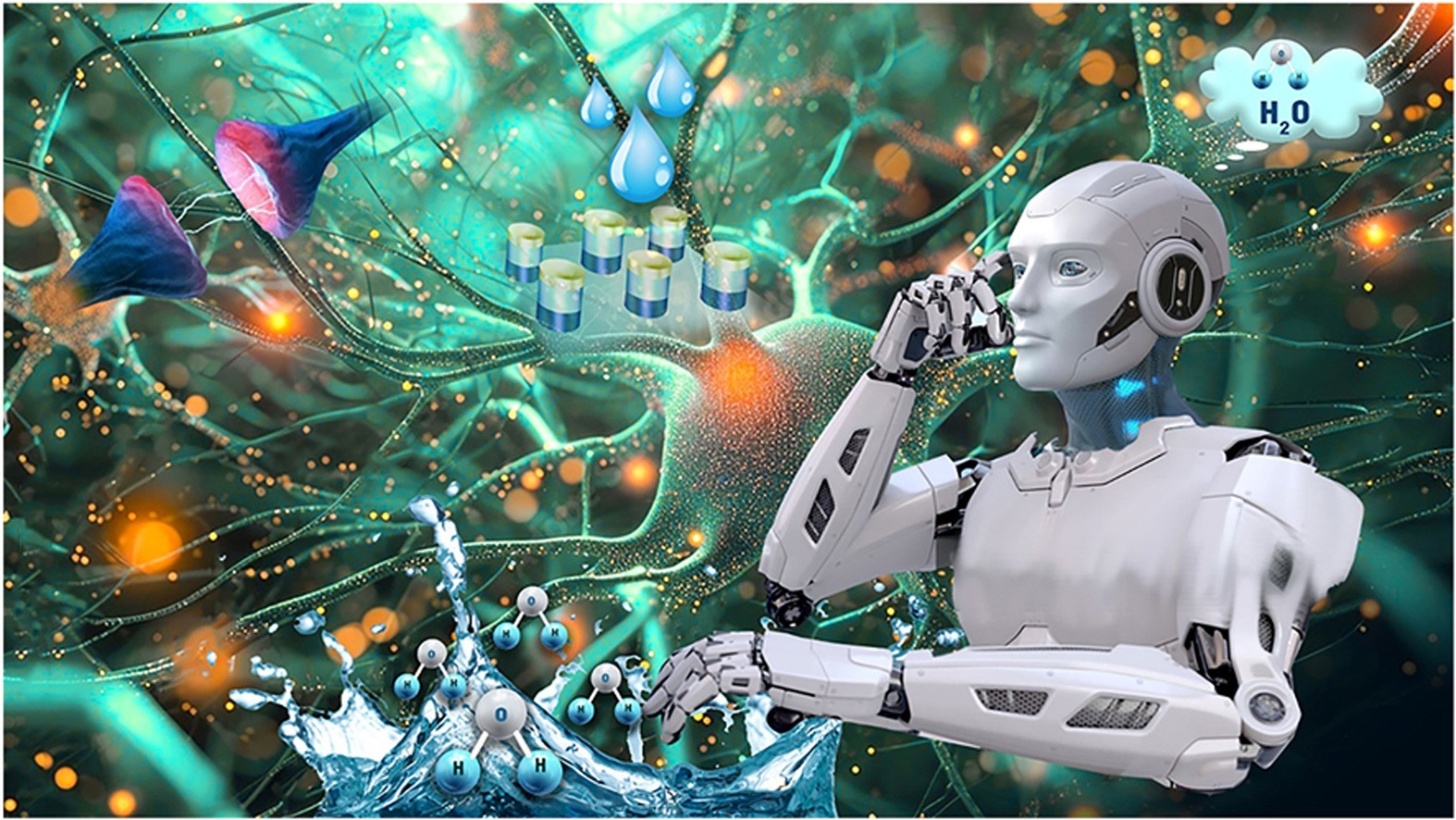

GA, UNITED STATES, September 24, 2026 /EINPresswire.com/ — A new humidity-sensitive memristive device that mimics brain-like synaptic functions without physical contact has been developed by an international research team. The device, based on porous nickel pyrophosphate (Ni₂P₂O₇), responds to ambient moisture by modulating its electrical resistance in a gradual, analog fashion – mirroring how biological synapses strengthen or weaken connections. This touch-free operation, demonstrated using a moistened finger positioned just one millimeter away, opens a pathway for artificial sensory systems that perceive environmental humidity and process information simultaneously, much like the human skin and brain work together.
The human brain processes sensory information through an intricate network of neurons and synapses, where synaptic plasticity – the ability to dynamically adjust connection strength – underpins learning and memory. Replicating this in hardware has driven intense interest in memristors, devices that change resistance in response to electrical history and are structurally analogous to biological synapses. However, integrating sensory perception directly with memory functions in a single device remains a major hurdle. Most existing approaches rely on physical contact or separate sensing and processing units, creating mismatches in signal amplitude and slowing response times. Given these challenges, there is a pressing need for in-depth research into materials and device architectures that can simultaneously perceive environmental stimuli and perform neuromorphic computation.
Now, writing in the journal eScience (Volume 6, Issue 4, July 2026), researchers from Jeju National University in South Korea, Queensland University of Technology in Australia, and Shivaji University in India report a humidity-sensitive memristive device built on a Au/Ni₂P₂O₇/fluorine-doped tin oxide (FTO) architecture. The device achieves analog resistive switching with tunable resistance states under varying relative humidity (RH) levels, and demonstrates non-contact synaptic responses using moisture from a human finger.
The team synthesized porous Ni₂P₂O₇ microsheets via a hydrothermal method and characterized their structure using X-ray diffraction and electron microscopy. When tested under RH levels from 42% to 82%, the device showed a clear and consistent increase in both hysteresis loop area and charge-driving capacity (“B” _”CW” ^”N” ) with rising humidity – establishing these parameters as quantitative indicators for humidity-responsive neuromorphic behavior. Notably, the device retained stable separation between high- and low-resistance states over hundreds of switching cycles and maintained memory for extended durations, confirming its non-volatile nature. Density functional theory (DFT) calculations revealed that water molecule adsorption narrows the material’s bandgap and introduces new hybridized electronic states near the conduction band, directly explaining the humidity-induced conductivity enhancement. The team further demonstrated that the device could emulate both short-term and long-term memory functions simply by varying the distance between a moistened finger and the sensor – closer proximity produced stronger, longer-lasting conductance changes. Support vector machine (SVM) and multilayer perceptron (MLP) algorithms classified proximity and humidity states with over 97% accuracy, showcasing the device’s readiness for intelligent environmental monitoring.
“What excites us most is that this device doesn’t just sense humidity – it remembers it,” the authors said. “The moisture actually changes the material’s electronic structure in a way that’s reversible and tunable, which means we can use humidity itself as a programming signal. And because we can do this without any physical contact, it opens up entirely new possibilities for applications where touch isn’t possible or desirable – like in sterile environments, through packaging, or even in future e-skin systems that need to feel the environment without direct contact.”
This dual-function capability – combining humidity sensing with analog memory in a single, non-contact platform – positions the device as a strong candidate for next-generation neuromorphic systems. Potential applications range from touch-free human-machine interfaces and smart healthcare monitoring to environmental sensing networks and soft robotics, where distributed, energy-efficient perception is critical. The integration of machine learning for real-time classification further suggests that such memristive sensors could form the backbone of intelligent IoT nodes that both perceive their surroundings and learn from them, bringing electronic systems one step closer to the adaptive, multifaceted intelligence of the human brain.
References
DOI
10.1016/j.esci.2025.100520
Original Source URL
https://doi.org/10.1016/j.esci.2025.100520
Funding Information
This work was supported by the National Research Foundation of Korea (NRF) grant funded by the Ministry of Science and ICT (RS-2024-00405278).
Lucy Wang
BioDesign Research
email us here
Legal Disclaimer:
EIN Presswire provides this news content “as is” without warranty of any kind. We do not accept any responsibility or liability
for the accuracy, content, images, videos, licenses, completeness, legality, or reliability of the information contained in this
article. If you have any complaints or copyright issues related to this article, kindly contact the author above.

Media gallery

