
Respected Recreational Fishing Advocate Finds Menhaden Petition “Legally and Factually Faulty”
WASHINGTON, D.C. / ACCESS Newswire / November 3, 2026 / Respected recreational fishing writer and longtime conservation
Press Release Disclaimer: This is a press release distributed through the XPR Media network. It has not been independently verified by our newsroom.


WASHINGTON, D.C. / ACCESS Newswire / November 3, 2026 / Respected recreational fishing writer and longtime conservation advocate Charles Witek has delivered a detailed rejection of the petition seeking emergency restrictions on menhaden reduction fishing in the New York-New Jersey Bight.
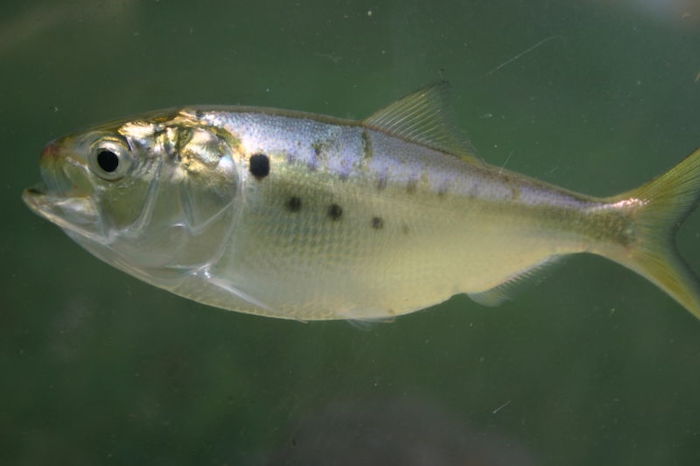
In an October 25 post on his blog, One Angler’s Voyage, Witek finds that the petition promoted by the Forage Fish Campaign mischaracterizes the science it cites, fails to establish an emergency and offers no evidence that its selective closure would accomplish its stated ecological goals. He also observes that the petition’s own economic figures support protecting Reedville, Virginia-a coastal fishing community whose workers and families could be affected by the proposed restrictions.
Witek describes the petition’s arguments as “legally and factually faulty.” His critique carries particular weight coming from a recreational fishing advocate whose writing emphasizes strong conservation laws and effective fisheries management.
The petition was submitted on behalf of the listed fishing organizations and businesses by Roger Fleming, director and attorney at Blue Planet Strategies. Witek also questions where it originated. He notes that the Forage Fish Campaign posted links to the petition but is not listed among the petitioners. Witek says it is unclear whether the petitioners developed it independently or were recruited by the campaign or another entity. He considers the latter more likely, but says it cannot be determined with certainty.
The scientific sources do not say what the petition claims
Witek’s most damaging finding comes from examining the documents in the petition’s own footnotes.
The petition claims that the most recent stock assessment concluded that, to rebuild striped bass, “significant reductions in the catch of menhaden are required so more are left in the water as food for striped bass growth, survival, and reproduction.”
Witek points out that the assessment does not say that. Instead, it found that, at the striped bass fishing mortality rate used in the model, striped bass did not reach their biomass target under any of the menhaden fishing scenarios examined.
The assessment also found that, even if striped bass were fished at their own mortality target, rebuilding depended on future recruitment. If recruitment remained at the very low levels observed since 2019, striped bass did not reach their biomass target even with abundant menhaden.
Witek further notes that the model projected a 6% increase in striped bass biomass if menhaden fishing ended entirely coastwide. In his view, that finding provides no basis for claiming that closing the reduction fishery in the New York-New Jersey Bight would rebuild the striped bass population.
The Atlantic States Marine Fisheries Commission, or the ASMFC, confirms the central point in its menhaden FAQ: Ending all menhaden fishing would not, by itself, rebuild striped bass to their biomass target.
Predator needs are already incorporated into menhaden management through ecological reference points. The petition’s references to ecosystem science do not establish that closing the reduction fishery in the Bight would rebuild striped bass.
Witek also examines the petition’s claim that “NOAA and ASMFC ecosystem science concluded that more menhaden must be left in the water as bait to help striped bass grow, survive, and achieve healthy population levels.” The petition cites an October 2025 ASMFC press release as support. But Witek points out that the release says no such thing. Instead, it explains that the ecological reference points are designed to account for striped bass forage needs while managing menhaden fishing.
For Witek, the petition’s mischaracterization of both the assessment and the press release is evidence that its request is not supported by the best scientific information available-the requirement of National Standard 2 of the Magnuson-Stevens Act (MSA).
The petition fails to establish an emergency-or justify its chosen remedy
Witek notes that the assessment on which the petition relies was released approximately a year before the petition was filed. It found Atlantic menhaden neither overfished nor experiencing overfishing.
The ASMFC’s analysis also projected a 0% probability of overfishing in 2026 under the adopted catch limit.
With the ASMFC preparing to consider future management measures in November, Witek questions the basis for bypassing that process through emergency federal action.
He also challenges the connection between the petition’s allegations and its proposed solution. Broad claims about menhaden’s ecological importance do not demonstrate that closing one fishery in one area would deliver the promised benefits. The petition, he argues, has not supplied that missing evidence.
Reedville is the kind of coastal fishing community National Standard 8 is intended to protect
Witek turns the petition’s economic argument against it.
The petition itself cites estimates of approximately 500 full- and part-time jobs and as much as $29 million in annual payroll and benefits associated with the Reedville-based reduction operation. Witek argues that those figures establish Reedville as one of the fishing communities contemplated by the MSA’s National Standard 8.
As NOAA Fisheries explains, that standard requires managers, consistently with the law’s conservation requirements, to account for fishing communities’ dependence on fishery resources, support their continued participation and minimize adverse economic impacts where practicable.
The community behind those figures is substantial. UFCW Local 400 describes a Northern Neck fishery sustained by generations of local families, family-supporting union jobs and one of Northumberland County’s largest minority workforces. Its fishermen describe livelihoods that support healthcare, college and local businesses, alongside their commitment to the waters that sustain them.
Yet, Witek finds, the petition offers no data demonstrating its claim that the reduction fishery causes significant economic harm to fishing communities in the Bight.
The petition therefore documents Reedville’s dependence on the fishery while failing to substantiate its claim that the reduction fishery causes significant economic harm to fishing communities in the Bight. Witek concludes that National Standard 8 provides a reason to minimize adverse impacts on Reedville and reject the requested emergency closure.
Bycatch allegations do not supply the missing evidence
Witek likewise finds that the petition neither documents nor quantifies reduction-fishery bycatch. Its reliance on the MSA’s National Standard 9 assumes the existence of a problem sufficient to justify emergency action without demonstrating it.
His conclusion is a forceful challenge from within the recreational fishing community: The petition has not made the scientific, legal or economic case for the closure it seeks. Instead, Witek writes, the debate is being muddied by “trumped-up claims” aimed at a particular industry.
Read Charles Witek’s full column.
About the American Small Pelagics Network
The American Small Pelagics Network represents fishermen, processors, suppliers, and coastal communities connected to fisheries such as menhaden, mackerel, herring, squid, and butterfish. ASPN advocates for sustainable fisheries management that supports critical fish species, while maintaining economic opportunities for fishermen and fishing communities.
PRESS CONTACT
Stove Boat Communications
202-595-1212
contact@smallpelagics.com
SOURCE: American Small Pelagics Network
View the original press release on ACCESS Newswire
Media gallery
