Emergency Seawalls Are Making Beaches Disappear — and 90% of Coastal States Aren’t Stopping Them
SAN CLEMENTE, Calif., Oct. 20, 2026
Press Release Disclaimer: This is a press release distributed through the XPR Media network. It has not been independently verified by our newsroom.

Emergency Seawalls Are Making Beaches Disappear — and 90% of Coastal States Aren’t Stopping Them
PR Newswire
SAN CLEMENTE, Calif., Oct. 20, 2026
SAN CLEMENTE, Calif., Oct. 20, 2026 As El Niño-fueled storms batter U.S. coasts, Surfrider Foundation’s 2026 State of the Beach Report finds no state has rules strong enough to keep “temporary” emergency seawalls from becoming permanent, and permanently damaging beaches
/PRNewswire/ — On the weekend of Oct. 10–12, surf from Tropical Storm Rachel, riding on El Niño-elevated sea levels, overtopped and breached the bulkhead protecting California’s Long Beach Peninsula, collapsing part of one of the state’s oldest boardwalks and leaving eight buildings red-tagged as unsafe. Two weeks earlier, a powerful nor’easter flooded coastal communities from New Jersey to New England. El Niño’s impacts are already being felt on both coasts, and NOAA’s Climate Prediction Center now puts the odds that this El Niño becomes the strongest ever recorded at 83%.
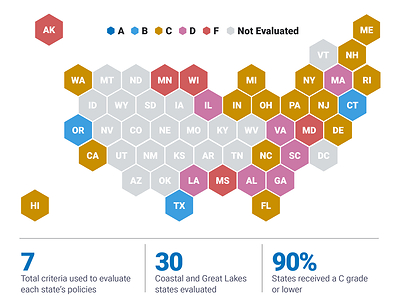
After storms like these, the response is almost always the same. Rock, sandbags, and concrete go onto the beach under emergency permits — and in most states, nothing ensures they ever come off. The Surfrider Foundation’s 2026 State of the Beach Report finds that 27 of the 30 coastal and Great Lakes states evaluated earned a C or lower for their policies to prevent unnecessary permanent armoring during or after an emergency.
READ THE 2026 STATE OF THE BEACH REPORT HERE
No State Earned an A
Surfrider graded each state’s laws against seven criteria, including whether emergencies are defined narrowly enough to exclude long-predicted hazards, whether written authorization is required before work begins, whether structures must be temporary and removed, and whether the state has clear enforcement protocols. Only Connecticut, Oregon, and Texas earned a B. Five states — Alaska, Maryland, Minnesota, Mississippi, and Wisconsin — earned an F. In all, 40% of states have failed to put minimum safeguards into law.
The report documents an “Emergency to Permanent Permit Pipeline.” An emergency is declared, armoring goes in with weak limits on its size, type, and duration, enforcement lags, and the “temporary” structure stays or is converted to a permanent permit. Once a hard structure is in place, the beach is pinned in place, upland sand replenishment is cut off, and erosion accelerates on neighboring properties — creating a need for new rounds of armoring. Many states are investing in long-term sea level rise and adaptation planning, but emergency rules that reward storm-by-storm armoring can quickly undermine those plans.
The examples span coasts across the country. In Hawaiʻi, sandbags authorized in 2007 as a three-year fix at a West Maui condominium complex remain on the beach nearly two decades later, and shoreline armoring has contributed to the loss of more than 13 miles of beach statewide. In Oregon, 20 of the 29 emergency armoring permits issued over the past decade came during a single 2021 erosion event, and in every Oregon case Surfrider analyzed, “temporary” armoring became a bridge to a permanent hard structure. In San Clemente, California, a series of emergency permits since 2021 has placed roughly 27,000 tons of riprap along a rail corridor, turning the beach that connects the world-famous Trestles surf breaks to the rest of town into an impassable pile of boulders.
The grades measure laws on the books, not how they are enforced, and the report finds that even strong policies fail without follow-through. In some states, temporary structures become permanent without any new permit at all, simply because no one enforces the removal deadline. Oregon, one of only three states to earn a B, has already lost walkable beaches along the Salishan Spit and Gleneden Beach to emergency riprap.
“The state of our beaches doesn’t have to be a state of emergency. El Niño isn’t a surprise. It’s a recurring, well-forecast weather pattern, and we’ve watched this one build for months,” said Emma Haydocy, Surfrider’s Coasts & Climate Initiative Senior Manager. “When a forecast weather or tidal pattern is treated as an emergency, rock and concrete go onto the beach with little review or oversight, and too often they become permanent fixtures along our shores. States can fix this by defining emergencies more narrowly, enforcing laws that require temporary structures to actually be removed, and proactively planning for long-term coastal resilience. An emergency permit should buy time for meaningful adaptation — not become a poor substitute for it.”
A Path Forward
The report recommends that every coastal state:
- Redefine emergencies to exclude forecasted hazards such as predicted storms, king tides, and sea level rise.
- Require written authorization in advance, ideally issued on-site after an agency inspection.
- Prioritize removal and restoration, limiting emergency structures to a maximum of two years.
- Trigger a long-term erosion response, so an emergency permit leads to nature-based solutions such as dune restoration, living shorelines, and planned relocation.
Momentum is building. In 2026, Florida enacted a coastal resiliency law, SB 302, that elevates nature-based solutions, and Hawaiʻi’s Board of Land and Natural Resources signaled a shift away from rubber-stamping repeated emergency extensions. Oregon is now updating its emergency armoring rules, with Surfrider serving on the rules advisory committee.
Protect Your Coast Before the Next Storm
Surfrider’s national network of more than 250 volunteer-led chapters and student clubs are bringing these recommendations to city councils, county commissions, and state agencies across the country. Coastal residents worried about how this winter season is impacting their beaches are encouraged to join their local chapter and help ensure their community’s response protects the future of their beach, instead of burying it under rock.
About the Surfrider Foundation
The Surfrider Foundation is a nonprofit grassroots organization dedicated to the protection and enjoyment of our world’s ocean, waves, and beaches for all people through a powerful activist network. Founded in 1984 by a handful of visionary surfers in Malibu, California, the Surfrider Foundation now maintains over one million supporters, activists, and members, with more than 250 volunteer-led chapters and student clubs in the U.S., and more than 1,000 victories protecting our coasts. Learn more at surfrider.org

 View original content to download multimedia:https://www.prnewswire.com/news-releases/emergency-seawalls-are-making-beaches-disappear–and-90-of-coastal-states-arent-stopping-them-302913947.html
SOURCE Surfrider Foundation